
Physician Burnout, Invisible Load, and the Power of Small Changes with Diane Shannon, MD, MPH
Sep 08, 2026When medicine starts to feel unsustainable, the instinct is often to search for a big answer. Leave the job. Change specialties. Cut back. Move. Start over. Those options may be appropriate for some physicians, but they are not the only forms change can take—and when someone is already burned out, even imagining a major overhaul can feel impossible.
That is the tension at the center of my conversation with Diane Shannon, MD, in Episode 46 of The MedLife Support Podcast. Diane is a former primary care physician, physician coach, speaker, and advocate for physician well-being who experienced severe burnout herself. Her work now sits at the intersection of two truths that medicine too often treats as opposites: healthcare systems must address the conditions that drive burnout, and individual physicians still need practical ways to reclaim agency inside the life they are living right now.
When Medical Training Teaches You to Stop Being Human
Diane described burning out during residency long before physician burnout was part of our everyday vocabulary. She looked around and thought everyone else seemed fine. She kept pushing because that was what training had taught her to do. Eventually, she could no longer see how she could remain in clinical practice and also have a life.
One of the most important things she wishes she had understood earlier was that being a physician does not erase being human. Medical training rewards endurance, delayed gratification, and self-sacrifice. Sleep gets shortened. Meals get skipped. Relationships are postponed. Social connection, exercise, and other ordinary human needs become things to get back to later. The problem is that 'later' can become an entire career.
That does not mean physicians are responsible for fixing a broken healthcare system by sleeping more or taking better care of themselves. It means the culture of medicine has normalized conditions in which basic human needs are repeatedly treated as optional. Naming that matters because sustainable careers cannot be built on permanent self-denial.
The Invisible Second Shift for Women Physicians
The conversation becomes even more complex for women physicians because the professional workload is often layered on top of an invisible cognitive workload at home. Diane used wonderfully ordinary examples: remembering the dental appointment, planning summer camps, coordinating the driving, noticing that the household is about to run out of mayonnaise. None of those tasks looks dramatic on its own. Together, they consume attention, planning capacity, and energy all day long.
At work, physicians are also dealing with rising productivity pressure, electronic health record demands, growing message volume, and unfinished work that follows them home. Diane described the mental burden of simply knowing there are charts still open. Even before the physician sits back down at a computer after dinner, the unfinished work is already taking up space in the brain.
For women physicians, that can create a particularly punishing combination: a visible clinical job and an invisible second shift at home. In dual-physician households, the domestic load does not automatically become equal simply because both careers are demanding. In non-physician households, traditional gender expectations can still shape who becomes the default planner, parent, and household manager.
Small Change Is Not the Same as Small Thinking
Diane’s work on microchanges is compelling precisely because it does not pretend systemic problems can be solved with personal habits. She is explicit that system drivers need system solutions. Physicians need leaders, organizations, and collective advocacy to change the conditions individuals cannot change alone.
But burnout can also create a sense of total powerlessness. Everything feels too big, so nothing changes. Diane encourages physicians to identify one frustration, break it into the smallest manageable first step, and treat the change as an experiment. If it works, there is useful information. If it does not work, there is still useful information. The result is not a verdict on the physician’s competence; it is data that helps determine the next move.
That shift matters because agency is psychologically different from control. A physician may not control staffing, compensation structures, patient volume, the EHR, or leadership decisions. But there may still be places to make a schedule request, set a boundary, change a workflow, stop volunteering for an unsustainable responsibility, ask for help, or reconsider a habit that is draining energy. Microchange is not an excuse for the system. It is a way to prevent total helplessness while the larger work continues.
When High-Achiever Traits Need a Volume Control
Many of the thinking patterns Diane sees in the physicians she coaches are not random flaws. Perfectionism, conscientiousness, people pleasing, and relentless attention to detail can help someone become an excellent physician. Those traits are reinforced all through training because medicine rewards them.
The trouble starts when the same qualities operate at full volume in every area of life. The physician who cannot disappoint a patient may continue taking on responsibilities long after they become unsustainable. The physician with a harsh inner critic may interpret one imperfect day as evidence of failure. The person who has always been rewarded for doing more can struggle to decide when enough is actually enough.
Diane’s language of turning the volume down is useful because it avoids the false choice between keeping a strength and eliminating it. The goal is not to become less caring, less responsible, or less committed. The goal is to recognize when a strength has crossed the line into a pattern that is costing too much.
Medicine Does Not Get to Be the Only Person in the Marriage
For medical couples, one of the most practical parts of our conversation was about transitions. A physician cannot always walk through the door and instantly switch from clinician to spouse or parent. Diane has seen clients benefit from something as simple as changing clothes, sitting quietly for a few minutes, or taking three minutes to meditate before stepping fully into home life.
But the spouse may also be at the end of a long day. The non-physician partner may have been working, parenting, coordinating logistics, absorbing schedule changes, or carrying the emotional weather of the household. The transition cannot become another invisible accommodation in which one person gets to decompress while the other person remains permanently on duty.
That is where the conversation between partners matters. What does the transition home need to look like for both of us? How much time is reasonable? What helps us reconnect before we move into dinner, homework, activities, and the next set of responsibilities? Those small rituals can become a protective layer around a relationship that medicine is constantly trying to interrupt.
Physician Well-Being Is Also a Leadership and Business Issue
Diane also had a direct message for healthcare leaders: physicians need to feel respected, valued, and heard. That requires more than wellness programming. It requires leadership behaviors that make it possible for frontline clinicians to communicate what is not working and for decision-makers to understand the operational consequences of their choices.
When clinicians repeatedly raise a problem and nothing changes, the message is not simply that a workflow is inconvenient. The message received is that their experience does not matter. Over time, that affects engagement, trust, retention, and willingness to stay in the organization.
This is especially consequential as women make up a growing share of the physician workforce. Losing physicians early, reducing clinical time because a career has become unsustainable, or driving experienced clinicians out of practice carries costs for organizations and for patients who already struggle with access. Investing in physician well-being is not a soft benefit. It is workforce strategy.
The Bigger Question: What Do You Want Your Life to Look Like?
One of my favorite parts of this episode had very little to do with productivity. Diane talked about how physicians get on the career train early. The next test, the next application, the next match, the next job, the next promotion. Medicine is built around milestones, and physicians become exceptionally skilled at delayed gratification.
That skill is useful during training. It becomes dangerous when delayed gratification turns into delayed living. Hobbies disappear. Friendships fade. Community narrows. Exercise, spirituality, creativity, and play become things to return to someday. Before long, a person can have an impressive career and very little sense of who they are outside of it.
The question Diane asks is deceptively difficult: What do I want? Not what is the next logical career step. Not what will look successful from the outside. What do I want my whole life to look like? That is a question physicians—and medical families—deserve to ask before burnout forces the answer.
Trying Something New, Even If You Are Bad at It
Diane shared that she learned to surf for the first time in her 50s. For a high achiever, trying something new can be uncomfortable for a reason that has nothing to do with the activity itself: being a beginner means being visibly imperfect.
Surfing became a useful metaphor for the broader work of building a sustainable life. You try. You may fail. You learn something. You try again. The goal is not immediate mastery. The goal is to allow life to become bigger than the small box created by only doing what you already know you can do well.
For physicians who have forgotten how to play, Diane’s starting point is simple: intentionally protect a small amount of time away from the phone and computer and do something that is not work. Five minutes counts. The activity is less important than the decision that some part of life will no longer be postponed indefinitely.
Small Changes Can Create a Different Direction
This episode does not offer a neat solution to physician burnout because there is no single solution. Systems need to change. Leaders need to listen. Workloads need to become sustainable. Women physicians need workplaces and homes that do not quietly rely on invisible labor. Couples need ways to reconnect before medicine consumes every available margin.
At the same time, a life does not have to change all at once to begin moving in a different direction. One boundary. One conversation. One protected transition. One experiment. One decision to stop doing something simply because you have always done it. Small changes are not small when they begin restoring a sense of agency.
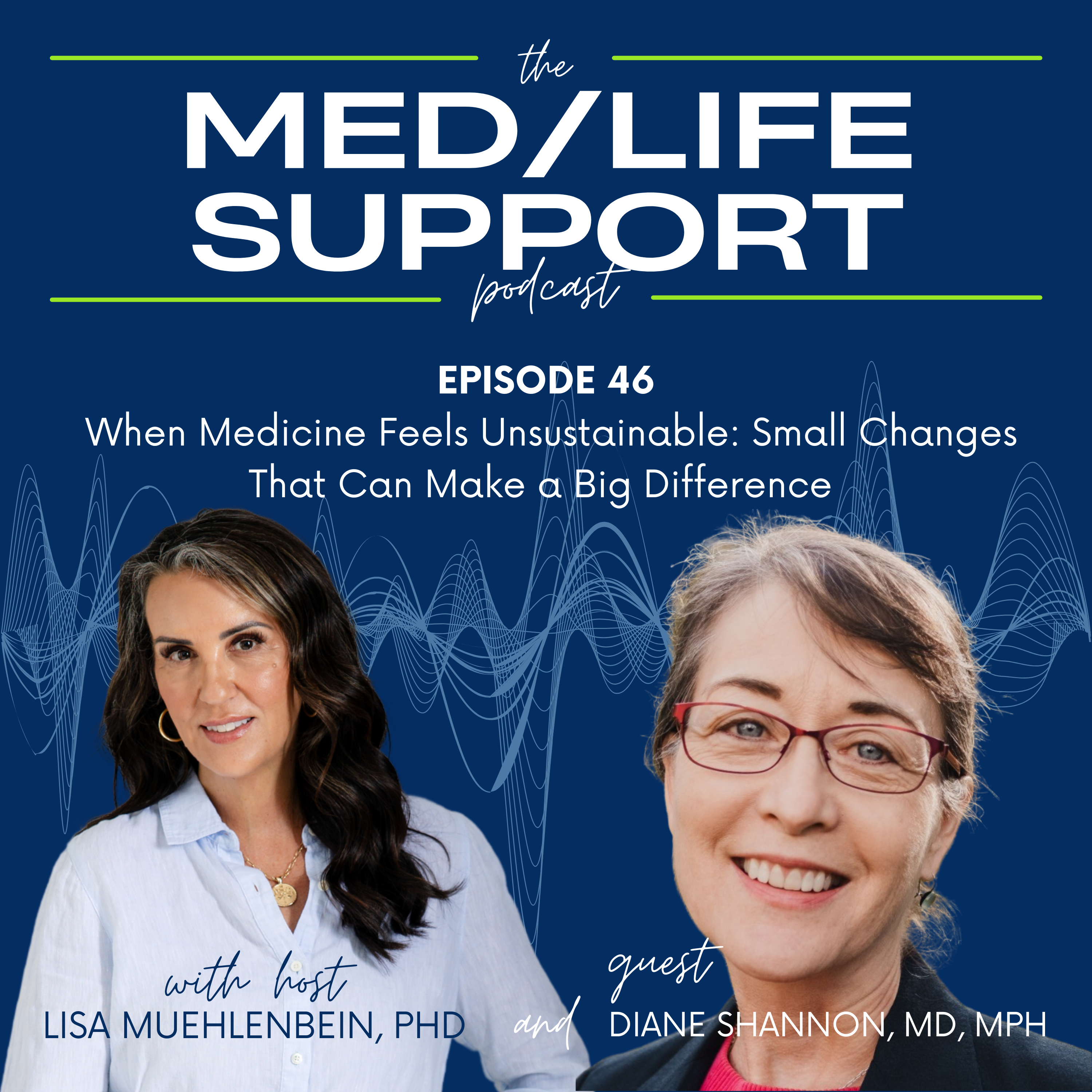
Listen to Episode 46 of The MedLife Support Podcast, featuring Diane Shannon, MD, on your favorite podcast platform. Subscribe so you never miss your dose of MedLife support—and share this episode with a physician, spouse, or medical family who may need a reminder that progress does not require perfection.
About Diane
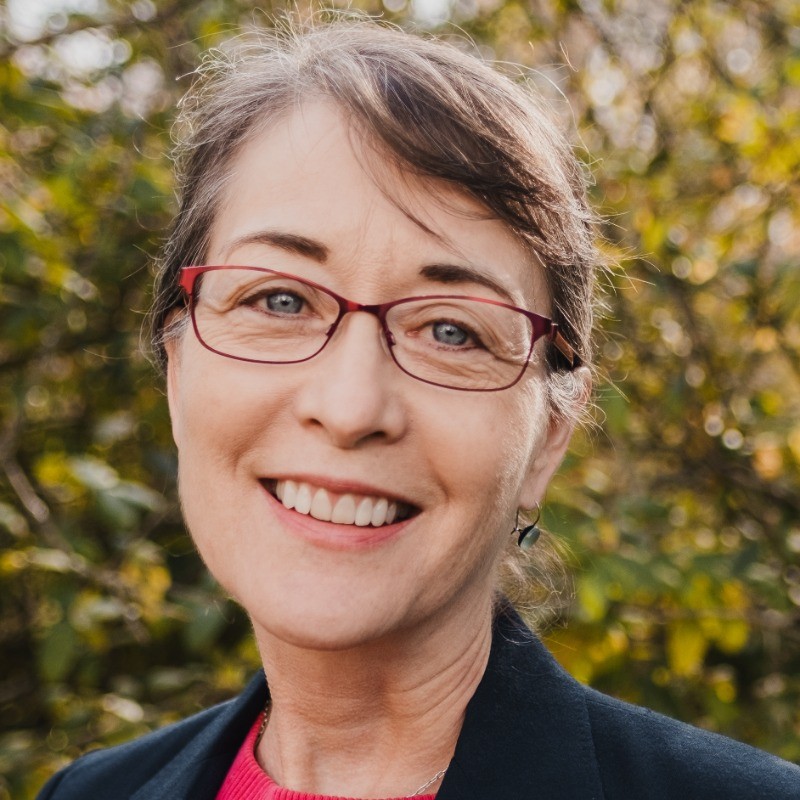
Diane Shannon, MD, is a former primary care physician, physician coach, speaker, healthcare writer, and advocate for physician well-being. After experiencing severe burnout herself, she dedicated her work to helping physicians—particularly women physicians—create more sustainable, meaningful careers.
She is the creator of a TEDx talk on microchanges and is developing Lead Your Way Leadership Academy, designed to help women physicians grow as leaders without sacrificing career sustainability.
Connect with Diane
Website: dianeshannon.com
LinkedIn: Diane Shannon, MD
TEDx Talk: Riding the waves: Lessons from surfing to beat burnout
Lead Your Way Leadership Academy
Diane's Book: Preventing Physician Burnout
Resources Mentioned In The Show
Take the Burnout Risk Assessment Quiz for Physicians and their Spouses
Get on the Waitlist for the Mastering The MedLife Matrix Course
Strong Ground by Brené Brown
Atomic Habits by James Clear
The Burnout Challenge: Managing People's Relationships with Their Jobs by Christina Maslach
Follow Dr. Lisa on Social Media
Instagram: @themedlifematrix and @themedlifesupportpodcast
Facebook: The MedLife Matrix and The MedLife Support Podcast
Website: www.themedlifematrix.com
Stay connected with news and updates!
Join our mailing list to receive the latest news and updates from our team.
Don't worry, your information will not be shared.
We hate SPAM. We will never sell your information, for any reason.
