
When Women Physicians Carry Too Much: Burnout, Identity, and Career Redesign
Oct 13, 2026When Women Physicians Carry Too Much: Burnout, Identity, and Career Redesign
There is a familiar explanation for burnout among women physicians: medicine is demanding, motherhood is demanding, and somehow women are expected to “balance” both.
That explanation is not necessarily wrong. It is simply nowhere near complete.
Women physicians are often carrying the visible demands of clinical work alongside layers of labor that are far harder to see: patient communication, inbox management, emotional labor, organizational responsibilities, cultural expectations about how women should behave, and the pressure to remain accommodating and available. Then many walk through the door at home and encounter another set of assumptions about motherhood, family responsibility, and who will ultimately keep everything moving.
In Episode 51 of The MedLife Support Podcast, I sat down with OB-GYN physician and physician coach Christina Adams, MD, to talk about what women physicians are actually carrying—and what becomes possible when endurance stops being treated as the only acceptable response.
The Load Is Bigger Than the Job Description
Christina has practiced OB-GYN for approximately two decades, and she has experienced burnout at multiple points in her career. Early on, she was caring for two very young children while practicing OB-GYN and taking frequent call. Later came the demands of private practice ownership, organizational transitions, clinical responsibilities, family responsibilities, and the accumulation of years spent functioning at an unsustainable pace.
But one of the most important points Christina makes is that the burden on women physicians is not merely the number of hours worked.
Women enter medicine having already spent years receiving cultural messages about what it means to be a “good” girl and later a “good” woman: be responsible, be helpful, do what is expected, do not inconvenience people, and say yes. Medicine can reward those same behaviors. The physician who says yes, handles everything, steps up again, accepts another responsibility, and never appears to struggle is often viewed as the dependable one.
Eventually, dependability can become over-responsibility.
Christina describes the invisible labor women physicians may encounter inside healthcare, including more patient communication, more interruptions, more expectations to perform relational work, and even seemingly small tasks that would be less likely to fall to male colleagues. She discusses the concept of “status leveling,” in which women physicians can be expected to soften traditional hierarchy by being more conversational, more accessible, more accommodating, or more willing to perform work outside the actual physician role.
Each individual demand may appear insignificant. The cumulative load is not.
Then Comes the Second Shift
The gendered expectations placed on women physicians do not disappear when the physician leaves the hospital.
Christina’s own family provides a striking example. Her husband, Mike, has been the stay-at-home parent for their two sons for more than a decade. Their family intentionally created a structure in which he became the primary parent handling many of the responsibilities traditionally assigned to mothers.
Yet the surrounding culture did not automatically adapt.
When the school needed a parent, they repeatedly called Christina first—even when she was working and could potentially be in the middle of an operation. The family could clearly communicate that Dad was the parent who should be contacted, but the assumption remained remarkably durable: call Mom.
That example matters because it illustrates something larger than an inconvenient phone call. Families can intentionally create a division of labor that works for them and still find themselves pushing against social expectations about whose career is primary, who is responsible for the children, and who should ultimately be available when something happens.
Women physicians may therefore find themselves carrying expectations from medicine and expectations from motherhood simultaneously, even when the actual structure of their family says otherwise.
Sometimes the Mental Load Is Hard to Put Down
There is another layer to this conversation that deserves attention because it is more uncomfortable.
Even when Christina and Mike intentionally changed their family structure, Christina describes how difficult it initially was for her to stop carrying responsibility for work that her husband had already taken over. She still wanted to make lists, provide instructions, remember the details, and make sure things were being handled the way she would handle them.
Eventually, she recognized something important: if he was responsible for that part of family life, she also had to allow him to be responsible for it.
That included accepting that he might do things differently.
This is especially relevant in medical families because physicians spend enormous portions of their professional lives being rewarded for control, decisiveness, precision, and responsibility. Those skills may be essential in the operating room or during a clinical emergency. They can create tension when brought into a marriage as though a spouse is another person to manage.
A sustainable division of labor requires more than delegating tasks. It requires genuinely relinquishing ownership of some of them.
Burnout Can Change Who a Physician Becomes
Burnout is often discussed in terms of exhaustion, but Christina describes something deeper: eventually, physicians can lose contact with the version of themselves who entered medicine.
They may begin to see patients differently. They become more irritable about things that once would not have bothered them. The next patient may begin to feel less like a human being who needs care and more like the next obstacle standing between the physician and the end of an impossible day.
That can be deeply disorienting because most physicians did not enter medicine feeling that way.
Christina describes the experience of looking back at an interaction and essentially wondering, Who was that? That is not who I am.
There is grief inside that realization. Burnout can take more than energy. It can take creativity, friendships, interests, connection, patience, family time, and parts of an identity that existed long before medicine became the organizing force around which everything else had to fit.
One of the exercises Christina uses with coaching clients is deceptively simple: she asks them what they used to enjoy before medical school.
For some physicians, even answering the question is difficult.
Agency Does Not Mean Blaming Physicians for Burnout
The solution to systemic burnout cannot be another demand that physicians fix themselves.
Mindfulness, self-compassion, coaching, boundary development, exercise, nervous system regulation, and other individual tools can be valuable. But those interventions do not erase the organizational conditions that contribute to physician burnout.
The challenge is helping physicians regain agency without confusing agency with blame.
Christina encourages physicians to identify the parts of their situation they can influence. What do you actually need? What are your non-negotiables? Can your current organization provide them? Can you negotiate for a different schedule, different FTE, different responsibilities, or another arrangement that makes the work sustainable?
And if the answer is no, what else exists?
Sometimes, as Christina says in the episode, the grass actually is greener.
There Is a Lot of Space Between “Endure” and “Quit Medicine”
One of the most important conversations happening around physician burnout involves physicians—particularly women physicians—questioning whether remaining in medicine is sustainable.
But the choice is not always binary.
Christina did not ultimately leave clinical medicine. She changed the way she practiced it.
After years in full-scope OB-GYN practice, she transitioned into an OB hospitalist role. Instead of moving between office patients and labor and delivery while carrying competing responsibilities across multiple environments, she can now be fully present for the patients who need her in the hospital.
The new structure also gave something back to her that had largely disappeared: time.
She could rest after call. She could read a book for pleasure. She could build her coaching practice and participate in advocacy work. Perhaps most significantly, she could be home when her son returned from school and simply sit with him while he talked about his day.
Those moments might appear ordinary.
When medicine has occupied nearly every available space in your life, ordinary can feel extraordinary.
Career redesign will not look the same for every physician. It may involve reducing FTE, changing specialties or practice models, moving geographically, accepting less income in exchange for more time, creating a direct-care practice, pursuing nonclinical work, or making another change entirely.
The essential question is not, What should a physician career look like?
It is, What does a sustainable physician career need to look like for this physician and this family?
Healthcare Organizations Need to Listen—and Then Act
Christina’s message to healthcare organizations is equally clear: ask physicians what they need, and then be prepared to do something with the answer.
Collecting information without acting on it can increase frustration rather than reduce it.
Physicians generally do not enter medicine because they are unwilling to work. They are highly motivated people who want to care for patients and contribute meaningful work. The problem develops when the conditions required to perform that work become incompatible with maintaining their own health, family life, relationships, and basic humanity.
Retention cannot therefore be separated from physician wellbeing.
Organizations facing physician shortages cannot afford to view physicians as interchangeable units of productivity. Listening to what makes work sustainable—and creating meaningful flexibility when possible—is not merely a wellness initiative. It is a workforce strategy.
The Family Gets a Vote Too
One of Christina’s most important recommendations for medical families is remarkably straightforward: determine what matters to your family.
Not what everyone else thinks your family should look like.
Not what traditional gender roles prescribe.
Not what medicine assumes you will sacrifice.
Not what the neighbors, extended family, school, colleagues, or culture expect.
Christina and Mike created a family structure in which Dad became the stay-at-home parent and Mom continued practicing medicine. Other families will make completely different choices. The point is not the specific arrangement.
The point is intentionality.
A medical career exists inside a family system. Sustainable decisions therefore require physicians and their partners to consider what they value, what they are willing to trade, what they are no longer willing to sacrifice, and what kind of life they are actually trying to create together.
Connection Still Has to Be Protected
At the end of every episode of The MedLife Support Podcast, I ask my guest for the practice that helps their medical family stay connected through the chaos.
For Christina and Mike, it became an hour together.
During COVID, they began sitting outside together for what they called happy hour. Sometimes there was wine. Sometimes there was tea. The beverage was irrelevant. The important part was deliberately creating a protected period of conversation when they could reconnect as spouses.
Their children eventually learned that unless something genuinely urgent was happening, that time belonged to their parents.
Christina described that hour of connection as something that strengthened the foundation of their family.
That may be the most important thread running through the entire conversation.
Sustainable medicine is not only about helping physicians remain in medicine. It is about making enough room in their lives for them to remain connected to themselves, their partners, their children, and the life they are supposedly working so hard to build.
Because a career can be successful on paper and still cost too much.
Listen to Episode 51
Listen to Episode 51 of The MedLife Support Podcast: “When Women Physicians Carry Too Much: Burnout, Invisible Labor & Career Redesign with Christina Adams, MD” on your favorite podcast platform.
Subscribe so you never miss your dose of MedLife support, and share this episode with a physician, spouse, partner, or healthcare leader who needs to understand what women physicians are being asked to carry—and why sustainable medicine requires us to look beyond the physician alone.
For additional research-based tools and support for physicians and medical families, visit TheMedLifeMatrix.com.
ABOUT CHRISTINA ADAMS, MD
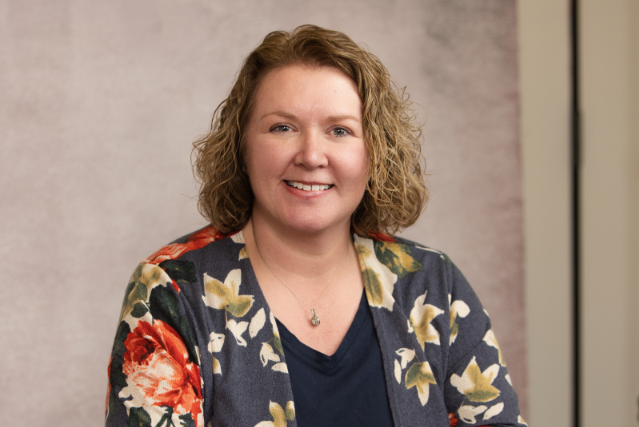
Dr. Christina Adams is an OB-GYN physician with 20 years of clinical and leadership experience. After 18 years in full-scope practice, she transitioned into an OB hospitalist role.
She is also a burnout and career transitions coach for women physicians, helping women at professional crossroads determine whether the future they want is possible in their current role and, when necessary, strategically transition into a role in which they can thrive.
Christina is a women’s health advocate who is actively involved in organized medicine. She currently serves as an ACOG District XII officer and leads the ACOG District XII delegation to the Florida Medical Association House of Delegates. She also hosts the Navigating Possibility podcast.
Connect With Christina Adams, MD
Website: https://www.christinaadamsmd.com
LinkedIn: https://www.linkedin.com/in/christina-adams-md-5b7642175/
Instagram: https://www.instagram.com/christinaadamsmd02/
Facebook: https://www.facebook.com/profile.php?id=61557977027465
Podcast: Navigating Possibility, available through Christina’s website and major podcast platforms.
Stay connected with news and updates!
Join our mailing list to receive the latest news and updates from our team.
Don't worry, your information will not be shared.
We hate SPAM. We will never sell your information, for any reason.
